
What Causes Appendix Pain?
Appendix Pain is rather common in the United States. About 10% of the American population is expected to develop appendicitis each year. Inflammation of your appendix will cause pain. It may lead to appendicitis or ulcers. The appendix disease affects anyone at any age mostly between the age eleven to age twenty nine. Appendix Pain is rare in children under age 2.
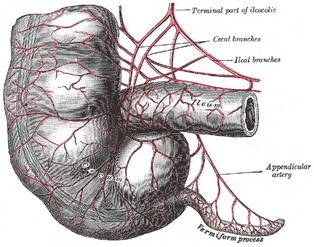
Appendicitis is defined as inflammation of the appendix. The appendix is a small tissue that enlarges from the large intestine about 3-6 inches long. Appendix Pain can be local or general depending on the area infected around the inflamed appendix.
If the appendix gets filled with something that makes it swell or become inflamed, appendix pain and appendicitis occurs. Possible causes may be mucus or bacteria, stool or a foreign substance in the appendix. When the opening is closed, it will become enlarged as well as infected and inflamed. [1]
Location of Appendix
The location of the appendix is in the lower right quadrant of your abdomen. If you place your hand on your abdomen with the tip of your little finger just touching your pelvic bone and your thumb at your navel, your appendix is right under there usually about where your middle finger lands. Do not push. Just use this as a way to locate your appendix if you are having pain in your lower right quadrant of your abdomen.
Symptoms of Appendix Pain
The children and the elderly people often do not have the classical symptoms of appendix pain. That is why it is so difficult to diagnose appendix disease in them. Nearly everyone in the world knows it is possible to live without an appendix. However, not as many people realize how serious appendicitis can be.
If you have any of the following symptoms which last for more than four hours you should go to the emergency room and see a doctor.
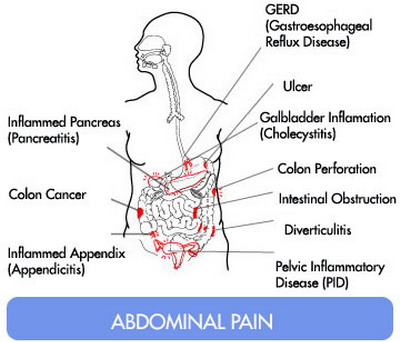
The main symptom of appendicitis is pain in the belly button area. It begins around the navel, or epigastria. Then it moves downward to your right ileal fossa. This usually takes several hours of inflammation which includes the peritoneum. A typical symptom for pregnant women is the pain in the abdomen.
The appendicitis pain will increase over a period of six to twelve hours and become very severe. As the inflammation spreads to nearby tissues the pain is likely to get sharper. Whenever the patient coughs or even tries to stay still the pain gets worse.
Diarrhea and vomiting, and diffuse abdominal pain, shock and confusion in older persons, low grade fever, and loss of appetite, nausea; sometimes anorexia are the basic appearing symptoms for appendix disease. Constipation is the most common symptom because the inflammation process tends to slow down the intestinal transit.
When the appendix is in an abnormal localized position after the Ilion, the symptom of diarrhea can also occur without fever. Pulse and temperature can increase as infection develops.
Diagnosis of Appendix Pain
Often appendix pain can be mistaken with other conditions like gastroenteritis and stomach ache. It causes symptoms like nausea, vomiting and abdominal pain after vomiting. The hardest patients to diagnose appendicitis are small children because in their case symptom cannot be so clear like in adult patient. Sometimes children refuse to walk because of hip pain, even before vomiting appears.
If someone in your family has appendicitis you should not give him food or water or painkillers. It is also important to avoid taking antibiotics or laxatives. All of this is to prevent complications during surgery, appendectomy.
Your doctor will take some tests to see if you have appendicitis or not. The urine test will be performed to count the white blood cell in the body and exclude urinary infection.If the doctor is doubts about your appendicitis, he will perform abdominal CT or ultrasound test.
Pain can be also increased by touching the area, by touch method the inflammation of the peritoneum can be checked by the doctor.
The Psoas tests: the patient extends the hip from the right side and performs the abduction of the thigh. The obturatory -muscle test- requires the patient to flex the right thigh and rotate the hip to the inside.
The Rovsink test is done by pressing the left ileal fossa . It will cause severe pain in the right ileal fossa. The rebound after releasing the pressure exercised in the right ileal fossa is a classic sign of appendicitis. These are the common objective clinical tests to prove the inflammation of the appendix. The patients may feel less pain, but have a rising pulse if the appendix perforates. At that time, surgery is imperative.
Treatment of Appendix Pain
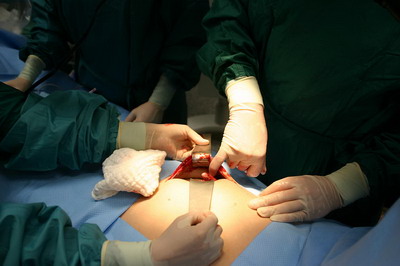
There is no other treatment for appendicitis except surgery. Before removing the inflamed appendix no oral intake of food and water is allowed because this could interfere with the anesthesia and surgery. The intravenous fluid provided will keep your body well hydrated during surgery.
Commonly appendicitis can be removed by appendectomy. This involves removing the appendix from the large intestine. The percentage of normal appendix removal is between 10-20% of the suspected cases in the world. Men are most affected by inflammation of the appendix.
If appendicitis is left untreated, complications will occur in your body. After successful surgery, most patients are able to do physical activity in just three to four weeks. A ruptured appendix may have caused other internal damage and require longer to heal.
When to See the Doctor
Usually the appendix pain is bad enough that most people do not wait to see if it gets worse. That is good thinking. Recognize appendicitis as very serious.
Appendicitis is still a very dangerous condition even with the technology of today’s medical facilities. You want to get the patient to see the doctor before the appendix ruptures. Surgery is less complicated if the appendix is simply inflamed and infected. If the contents spread throughout the abdominal cavity, peritonitis is likely to occur and result in further problems. Do not wait a few days to see if it gets better. [5]
References
- http://www.ncbi.nlm.nih.gov/pubmed/8149038
- http://www.webmd.com/digestive-disorders/understanding-appendicitis-symptoms
- http://www.webmd.com/digestive-disorders/digestive-diseases-appendicitis
- http://www.livestrong.com/article/145460-different-appendicitis-symptoms/

Appendix Pain and abdominal pain is smellier kind od pain.in this article clear the symptom of appendix informative article.